The topics of this blog are Armand-Jean du Plessis, Cardinal Duke of Richelieu, and the IDEAL CITY built on his command next to his magnificent CHÂTEAU on the borders of Touraine, Anjou and Poitou, in France.

Tuesday, 1 September 2009

Éolienne Bollée - A wind turbine by Bollée


The Abbé Henri Proust, already dead before the invention of fossil-fuel-based electricity, is clearly interested in the green agenda for renewable energy supply.  So he likes the windmills conceived and manufactured by the famous engineer Ernest Sylvain Bollée of Le Mans (two hours by as yet uninvented car from Richelieu in the département of Sarthe).
This nice example served as a water pump for a 19 century chateau that lies between Azay-le-Rideau and Montbazon (see Google maps to the right).  Most of the early Bollée turbines were supplied to the aristocracy and the gentry, as certainly in this case.

Details of another wind turbine by Bollée are to be found HERE.
For true obsessives (like the Abbé himself) try HERE

Friday, 28 August 2009

15 August - the procession for the Assumption of the Virgin Mary


On August 15 each year the church at Richelieu celebrates the day when Roman Catholics believe that Mary was lifted into heaven.  The gilded 17th century statue* of the Virgin is taken from its usual plinth in the church and paraded through the town; in this view on its return from the statue to Mary that sits on the site of the former nunnery at the north-west corner of the cité idéale of CARDINAL duc de Richelieu and his nominated shepherd of the new town's s souls, Vincent de Paul (later canonised as Saint Vincent).

Marian worship is an important part of the Catholic faith and the acceptance of the Her Assumption to heaven is a formal Dogma of the church based on the interpretation of the faith and Papal Infallibility.  The Church hesitates still to decide whether she was alive or dead at that critical moment.  Quite a teaser, that one!

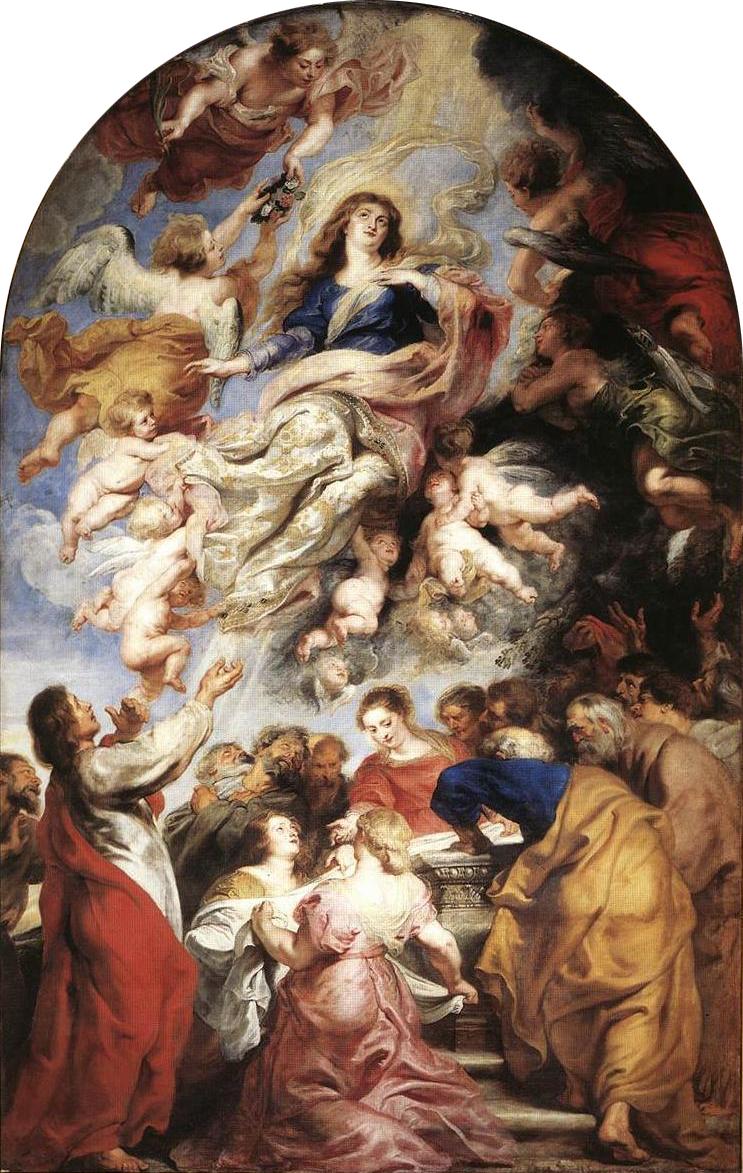
The Assumption has been the subject of many famous religious paintings, notably those of Titian and Rubens, both paintings more or less contemporary with the town's construction and St. Vincent's pastoral duties.

Assumption Day remains a public holiday in laïc France.

*actually this particular statue is a replica of the real original one stolen from the church in 2004.

Thursday, 27 August 2009

Pierre apparente

Pierre apparente (visible stonework) is a French mason's technique of pointing coursed rubble masonry (moellons) to give refurbished new-looking wall with replaced lime pointing.  It stands in contrast to a fully rendered rubble wall (with enduit or crépi).

The Abbé HP has always been puzzled how the artisans of masonry can achieve such a clean and pretty result, with the rubble's stone faces emerging from a sea of pointing, that might in one's own hands have looked little more than a schmooey mess.

Stage 1 is to use a masons pick to take out all the old lime pointing to a depth of maybe 5 cms. Then one sees if the rubble stonework can ever actually look pretty! Any stonework repairs required are carried out at this point.

Stage 2. On a big job one uses a lime-mortar 'concrete pump' - more or less like a motorised toothpaste tube for elephants - to squirt lime-based mortar (lime chaux + sharp sand) into the exposed joints. Lots will fall to the ground and have to be re-used or cleared up.  Then the mortar is troweled hard into the joints by hand while it is still quite runny.  Lime mortar, unlike Portland-cement-based mortar, does not adhere very well unless pushed hard home.
Then the magic wait - that only experience knows - that allows the mortar to 'go off' enough to work on.
Stage 3. Surplus mortar is removed to exposed the rubble faces with a stiff wire brush, and each stone's face is brushed up as clean as possible.  The lime mortar falls away from the face in a way that only lime mortar allows.  Careful artisans can achieve a really beautiful result, and this restoration process can be repeated many times over hundreds of years, as with the 18th century school canteen example in the pictures.
Stage 4 cleans up all the fallen mortar and the rest of the building site.  Lime mortar blends with the rough rubble stonework of tuffeau field-stone that is so typical of Touraine to make a really charmng blond wall that catches the sunlight so well.

In the 17 and 18th centuries pierre apparente was only used for utility buildings, being definitely third class after cut stone pierre taillée and its cheaper cousin, full lime rendering crépi.  The château of Richelieu was obviously in cut stone, the hôtels particuiers in render, and humble buildings like this one in pierre apparente.  Likewise, the roofs of quality houses had steep slate ardoises Touraine roofs, while this one has a Poitevin flatter-pitch  roof with humble Roman tiles tuiles rondes.


Wednesday, 26 August 2009

just like a canvas by Watteau......


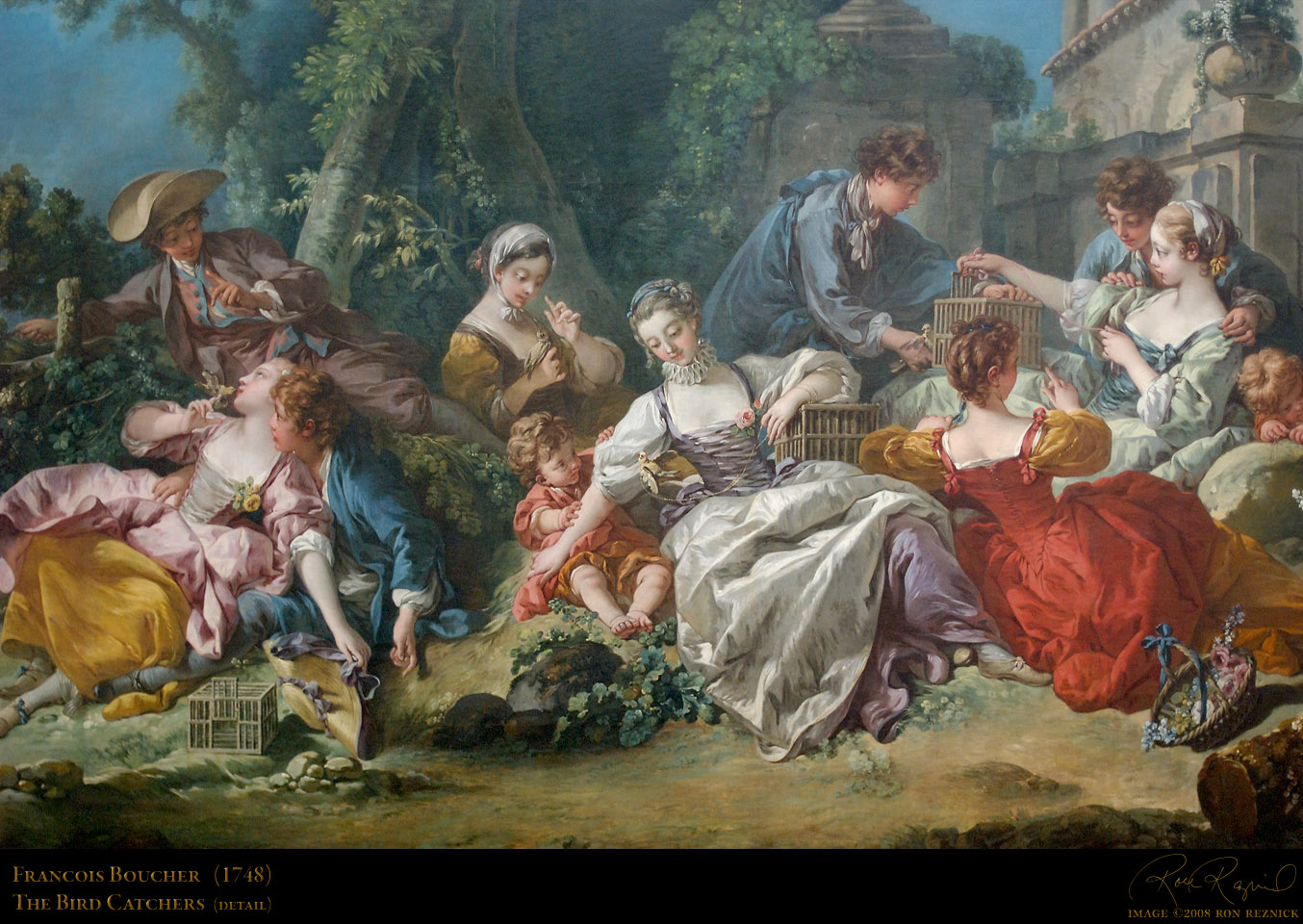
One of the wonderful August 2009 concerts in the Festival of Music at the Dôme in Richelieu organised by Nicholas Boyer & Gala Ringger was given in the centre of the rosegarden located in the courtyard of the old château de Richelieu, protected by the imagined inner courtyard of honour, the moat and the two arrival courtyards. Rather odd to listen to music on flute and harp in the open air surrounded by so much of the backdrop of the paintings by Watteau and Boucher of the fêtes galantes of the era of the third duke of Richelieu, himself the human model for the rakes Lovelace (Clarissa - Richardson), Valmont (les Liaisons Dangereuses - Laclos) and Octavian (Rosenkavalier - Richard Strauss - 'probably').


Do come to this festival of music next year - early in August 2010 - it will be sublime!

sublime |səˌblʌɪm|adjective; of such excellence, grandeur, or beauty as to inspire great admiration or awe.
ORIGIN late 16th cent.(in the sense [dignified, aloof] ): from Latin sublimis, from sub- ‘up to’ + a second element perhaps related to limen ‘threshold,’ limus ‘oblique.’

Monday, 24 August 2009

CADILLAC LASALLE CLUB FRANCE


This site will now on feature the communications of this illustrious club, operated and run from the drop-dead-gorgeous 17th century 'ideal town' of Richelieu, 20 kms south of Chinon, in France's lovely valley of the mighty river LOIRE.

Empty roads, beautiful destinations, gastronomy, hardly any wine (when motoring), supreme ELEGANCE and COMFORT all in  America's finest!!


- Cadillac Lasalle Club France -
21 Grande Rue
37120 RICHELIEU
France
00 33 2 47 58 18 64


Pierre Gravel


gravel.not@wanadoo.fr


Use the special button on the column on the right to filter all the 'posts' that concern those suave and magnificent bagnolles !

Back from la douce France

The Abbé Henri Proust has returned to the ghastly metropolis outre-manche and will very shortly continue  his works on the

Cité Idéale de RICHELIEU.

On his congés he only took his fishing equipment, and so there was  a brief caesura in the e-ther........

Tuesday, 30 June 2009

Citoyenne! Citoyen! Do YOU own a Cadillac?


In 2008 the notary of the cité idéale of Richelieu, Maître Pierre Gravel, founded a car enthusiasts club for Cadillac & LaSalle cars, made in that 'city of the rapids', Detroit, Michigan USA. He has already attracted more than 20 members and looks forward to further expansion of the club this year. While mighty General Motors is wobbly in the US at present, the subject of a huge 'bale-out' in the 2008 Credit Crunch, the older grandiose cars of this marque certainly have their following in France.
Below a member's car - a 1937 Fleetwood ‘Convertible Sedan’


Below in Scribd is the second annual report which shows how to register your own vast automobile and join in the club's activities.  In French - get used to it!

Bulletin CLC Fr Vol 2

Wednesday, 24 June 2009

Retail shops (1)


Bruno Hulin's wonderful charcuterie

The cité idéale of Richelieu is not a wealthy town.  It has never been really prosperous since the death of the cardinal in 1642.  After all, without the great minister himself, and since the 1830s without his grand palace filled with the entourage of the succeeding dukes of Richelieu, is this not a truely isolated large village, surrounded with 30 kilometers of agricultural land in every direction? Any pre-existing centre was reduced at the cardinal's command to emphasise the hubris of the great man's new duchy.
In the nineteenth century, Paris' passion for baby white veal made Richelieu a centre for animal husbandry; place Louis XIII was a busy veal market; a large veal factory on rue Henri Proust sent its product to Paris from the grand new SNCF railway station, through Chinon on to the metropolis.  Today veal and other livestock are raised elsewhere, white veal is almost taboo and the railway line lies derelict (see photo below).
There are a few factories on the town's industrial estate on the road to Chinon, but these seem frail. The largest, Richelieu Art et Meubles de France, has now moved much of its furniture production to Romania, and the large factory seems ghostly in comparison with former days. Timber and stone construction firms seem the most active.  Ets. Merlot have just constructed a new computerised timber mill, but this seems exceptional.
Chômage - unemployment -  secondary and retirement homes (and three schools!) are today the main business of the town intra-muros.  The actual residential population within the walls must be very low; the official statistics for the town of Richelieu show 2000 souls registered at the Mairie, but only a small proportion actually live within the walls of this Touraine Pompeii.

The retail business of the town is largely conducted at the neighbouring suburb of Chaveignes where the town's few 'grand surfaces' are located; Intermarché Mousquetaires supermarket; recently expanded, a branch of the Weldom hardware franchise, the builder's merchants Colomat. But these three make a viable business by serving the car-driving population of the large agricultural hinterland that, being isolated, finds it quicker to get to Chaveignes in a car trip of a few miles (with easy parking) than the one hour trip to the mega-grand surfaces of Chambray les Tours.
This paradoxical dilemma is the reason that the town remains zombie-like; neither really dead nor really alive. This is why the extraordinary architectural feat of the town is, to this day one might say, 'in a vegetative state'.
There are a few retailers within the town itself - presumably rents are very low - and they show the much loved traditional face of la France profonde, but they seem to be closing too - last year M. Bigot's (sic) fish shop closed, with even the adjoining pompes funebres shop joining him in funereal obsequies.  Even death doesn't make enough loot to survive!!
Bruno Hulin's wonderful charcuterie however clings on, succeeding despite the lengthened charcuterie counter at the supermarket, by supplying wonderful authentic Touraine products. Here (above) is a façade to be proud of -
P.S. This reads a bit negative (even if it is largely true): I'll find a some other shops that grace the walled town to show all is not yet lost.  Maybe la belle dormante can be awakened by the right prince's kiss.

the derelict railway line - zero maintenance!

Sunday, 21 June 2009

Friday, 19 June 2009

20th anniversary of the twin towns of (F) Richelieu - (D) Schaafheim


 The 20th year's festivities of the twinning of the towns of Richelieu and Schaafheim were held over the weekend of the 13-14 June 2009.  Schaafheim is a small town in Germany located a few miles from Frankfurt.

You can read the back story of the twinning HERE.

About 80 people came from Germany by bus and were hosted by various families from the town of Richelieu. Speeches were made; dinner was eaten in the market hall; concerts were sung; picnics were had; wineries and vineyards were visited.

The Schaafheim town band played for the gatherings.  

 M. le Maire/secrétaire d'État Hervé Novelli presented a rusting 'Cor-ten' laser-cut panel to the Burgermeister of Schaafheim, Reinhold Hehmann, to mount in the Rathaus back home.

Blogmaster Henri Proust finally met his virtual e-chum, Schaafheim archivist Wolfgang Roth.

Everyone now awaits the away fixture of 2010!

Vive l'amitié Franco-Allemande!

Wednesday, 17 June 2009

Beautiful dereliction - midsummer


In mid June the sun is not only the highest in the sky but also the brightest.  This picture shows the dark azure sky at mid-day in mid-June shining down on the ragged roofs of 16 Grande Rue.

Very shortly the builders will re-roof this old building and make it sound and weather-tight again. But something picturesque will be lost, don't you agree?  Traditionally constructed buildings using old and 'noble' materials distress so well.

John Ruskin swooned over 'The Stones of Venice' below;
I for my part swoon over the crumbling fabric of the cardinal's hubristic cité idéale.

Since the first dominion of men was asserted over the ocean,
three thrones, of mark beyond all others, have been set upon its sands:
the thrones of Tyre, Venice, and England. Of the First of these great
powers only the memory remains; of the Second, the ruin; the Third,
which inherits their greatness, if it forget their example, may be led
through prouder eminence to less pitied destruction.

The exaltation, the sin, and the punishment of Tyre have been recorded
for us, in perhaps the most touching words ever uttered by the Prophets
of Israel against the cities of the stranger. But we read them as a
lovely song; and close our ears to the sternness of their warning: for
the very depth of the Fall of Tyre has blinded us to its reality, and we
forget, as we watch the bleaching of the rocks between the sunshine and
the sea, that they were once "as in Eden, the garden of God."

Her successor, like her in perfection of beauty, though less in
endurance of dominion, is still left for our beholding in the final
period of her decline: a ghost upon the sands of the sea, so weak--so
quiet,--so bereft of all but her loveliness, that we might well doubt,
as we watched her faint reflection in the mirage of the lagoon, which
was the City, and which the Shadow.

I would endeavor to trace the lines of this image before it be for ever
lost, and to record, as far as I may, the warning which seems to me to
be uttered by every one of the fast-gaining waves, that beat, like
passing bells, against the STONES OF VENICE.


Tuesday, 16 June 2009

Music Festival in the Dôme in the Parc - August 2009


click on the images above to enlarge them in a new window

The well known pianist, Nicholas Boyer, is the artistic diector of the growing and successful 

Festival de Musique du Dôme de Richelieu

The events take place centred on the Dôme in the Parc de Richelieu, the remnants of the huge palace built for the eponymous cardinal duke in the 1640s. This year will be the first to welcome the Orchestre Symphonique de la Région Centre from Tours.

The concerts run from 31 July 2009 until the 15 August 2009. 
A initiating concert & dinner take place at the Château de Chargé on the 31st July.

For information and reservations for the concerts call 00 33 (0)2 47 58 13 62 or www.festivalmusiquerichelieu.fr

For the concert & dinner call 00 33 (0)2 47 95 67 97 or e-mail info@chateaudecharge.com

see the location of the Dôme on the map on the right