The topics of this blog are Armand-Jean du Plessis, Cardinal Duke of Richelieu, and the IDEAL CITY built on his command next to his magnificent CHÂTEAU on the borders of Touraine, Anjou and Poitou, in France.

Wednesday, 30 September 2015

Christmas cards of Richelieu in the snow….

TOUR SAINTE ANNE 
RESTORATION


To raise funds to help a restoration project in our beautiful local town, we would like to sell you a 'Richelieu Christmas Card'.

Tour Sainte Anne is an iconic 17th century vestige of cardinal-duc Armand-Jean du Plessis'  Richelieu - untouched, architecturally perfect but now dilapidated. As friends of Richelieu, we would like to ask you to help by buying this wonderful and evocative Christmas/Greetings Card.

Alan Halliday, an acclaimed professional artist who lives nearby, has kindly donated the use of his painting free of charge.  The interior of the card will be blank to enable its use for Christmas but also all year-round.

'Richelieu in the snow'


All the profits from the sale of the card will be donated to the restoration of Tour Sainte Anne.


 The restoration of the tower continues the work of Le Fonds de Dotation - Ville Cardinale which has already restored the gates at the Porte de Chinon


The card will be quality produced with a full colour front page and supplied with an envelope included. The minimum order is for 20 cards and envelopes at £20/€26 (plus p&p if required.)

To ensure that we can get the most competitive printing costs and ensure we raise as much money for the project as possible, if you are interested, please could you give an indication of the number of cards you would like to purchase in an e-mail to Alison Kimber-Bates.

Should this idea be widely embraced, Alan Halliday has a number of other wonderful images that could be used to create further greeting cards. We would like to encourage other local artists to also consider donating the reproduction rights of their images to be used to fundraise for this and other projects in the future.

If you know anyone who you think would like to purchase these cards, please feel free to forward this e-mail to them and help us to restore the Tour Sainte Anne. If you could indicate how many cards you would like, that would be very helpful so that we can get the order placed.
We look forward to hearing back from you to place your order.

Ali and David Kimber-Bates    alikimberbates@yahoo.co.uk


 ***


Thursday, 17 September 2015

Dove/Pigeon and the golden girls...

Where is this, then?

n.b. golden dove on mademoiselle 1,  pigeon on the tête de mademoiselle 4

Thursday, 20 August 2015

French water pumping sub-stations - 2 Champigny-sur-Veude


***

The Church of Our Lady, Richelieu - seen from the north

The church of Jacques Lemercier
lit from the north-east in the early morning
***

The Dôme - last vestige of the Château de Richelieu

The main façade of the Dôme that looks north toward the original entry avant-cour
The Dôme as it was originally, flanked directly by other elements, all  as drawn by engraver Jean Marot in 1660


The Dôme, as called, is the only remaining fragment of the palace built by the cardinal duc in the 1630s and subsequently occupied by the 6 succeeding ducs de Richelieu. With the Orangerie and the wine cellars. The whole palace remained complete and intact up to the Revolution of 1789, when the aristo 5th duc escaped the guillotine to Russia and the court of Catherine the Great.  The ducal estate was annexed to become national property. Having been considered and then rejected as a noble reward for one of the celebrated military marshals of Napoleon, the ducal estate and property in its entirety was flogged off for demolition by a marchand de biens called Boutron, over a period of forty years.

The estate was finally reconstructed by a Franco-American banker from New Orleans called Michel Heine who had made his mega-wad financing the Franco-Prussian war. He married his daughter Alice to the 7th duc de Richelieu to add a bit of noble lustre to his family's new-found wealth.  He reassembled the parc and what was left of the buildings, finding in the Dôme a simple hall that had originally been the entry portal to the manège (or horse training court) of the original castle.

Today it is hard to see how much of the building is in its original state. It was originally flanked on its east and west façades by a straight range of buildings forming the southern wall of the avant-cour.  Chimneys rose on the east and west walls that touched their contiguous neighbours.  The grandiose fireplace within that exists today now lacks a chimney!

We surmise that much of today's Dôme was rebuilt to make the symmetrical pavilion that we know today. It is hard to see any new/old joining in the tuffeau stonework and the conclusion is that the current state is far from its 17th century forbear.  The 7th duc had hired the then-famous landscape architects, the Bühler brothers*, to recreate the park and avenues that we know today, the arboretum planted on the castle site itself, and the 19C carp pond that sits in front of the Dôme of today.  Who knows now how much 'reconstruction' was needs to cover the scars left by the dastardly Maestro Boutron?

Note the cardinal's arms at high level


A concert in the Dôme 
In recent years, the dôme is a tourist feature of the town and park, which accommodates models of the château and town.  It is owned by the Universities of Paris in succession to the Sorbonne itself, but is administered jointly by the municipality of Richelieu. It is the main venue for the Fête de Musique that occurs early in August each year.

*  Not really certain. They certainly did do the gardens at Azay-le-Ferron, not far away.  While their expertise was mainly in the then-fashionable jardins à l'Anglaise, they were experts in the fancy tree plantings which are evident everywhere today in the parc; Wellingtonias, Cedars etc.

Curiosity killed the cat….

The 19C steel staircase to the upper levels

The first floor apartment


looking out over the park

the main N facade window at first floor level

a decorated door at first floor

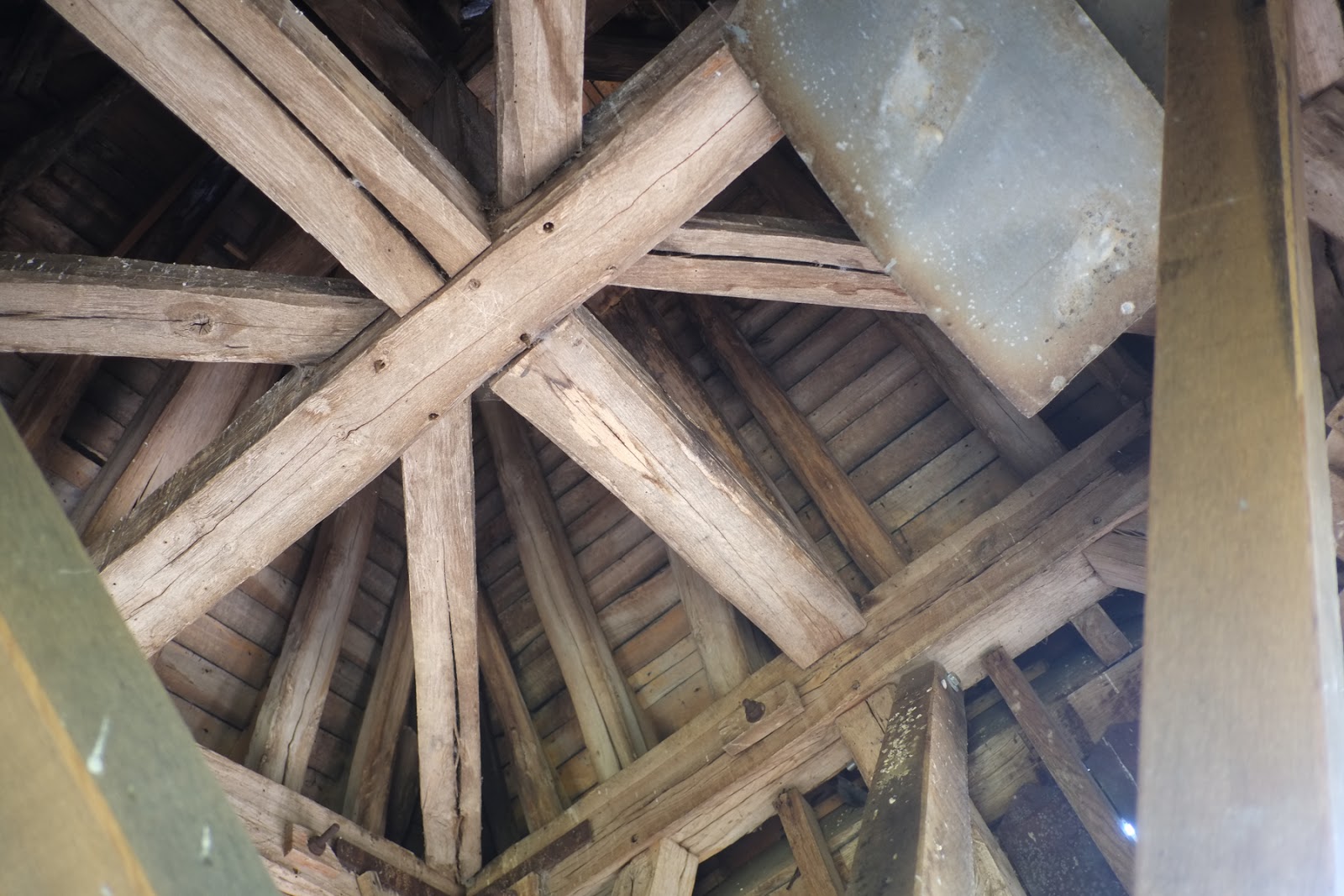
the cupola's  timber construction

high level windows

looking out and down

the clock mechanism


the clock, cupola and cardinal's arms

***


Tuesday, 18 August 2015

French water pumping sub-stations - 1 Courcoue

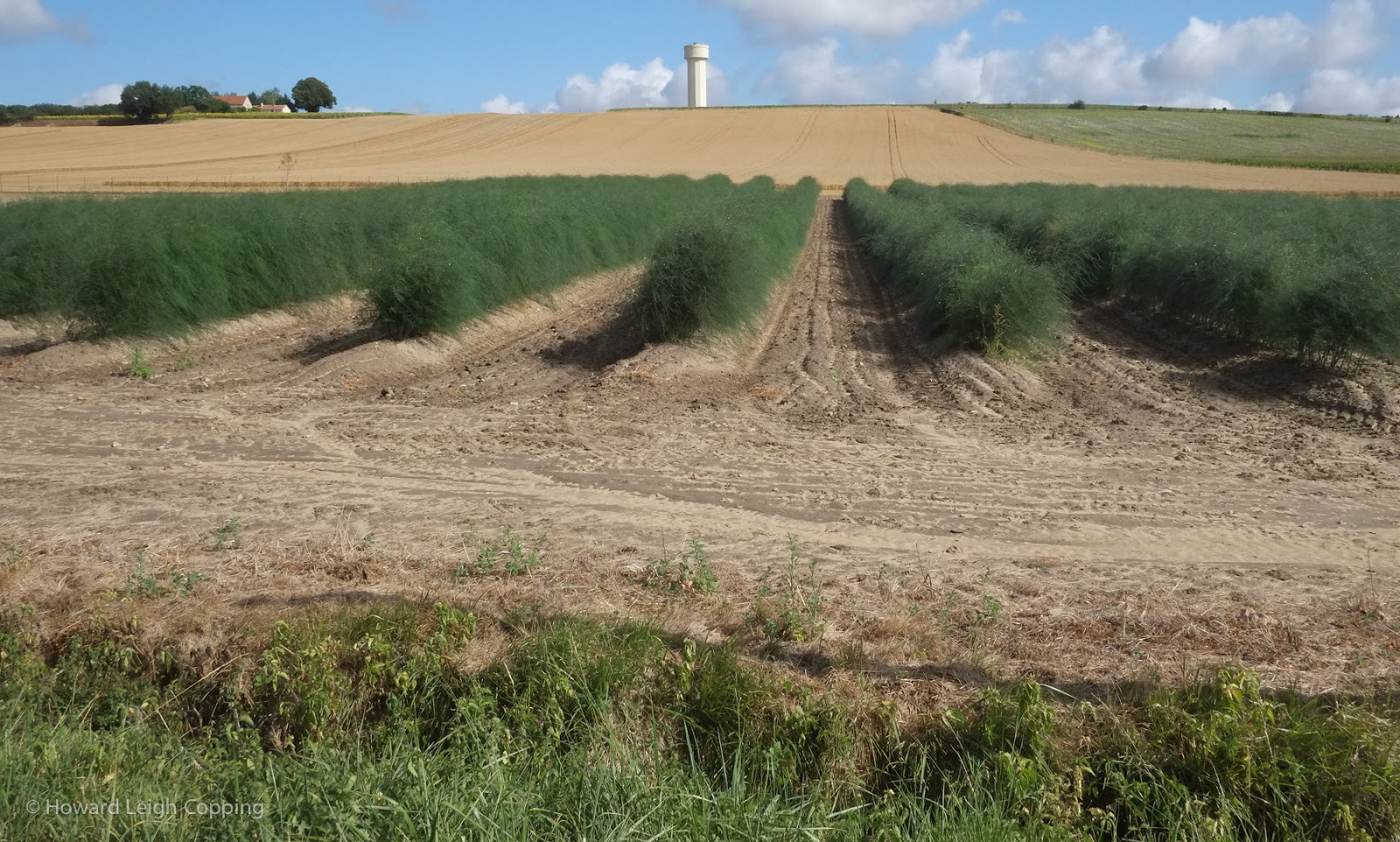
I like a good sub-station and deep France has some good examples - Utility taken to the level of Beauty. The little village of Courcoue has a rather special example, so here is a little photo essay.

The water tower on the hill behind


New projects on the rue des Gaultiers

The street that is next to the Mable river on the eastern perimeter of the town seems to have an absolute rash of new projects that indicate a new confidence in restoration and renewal.

The rue des Gaultiers - the street of 17th century mercenaries.

A completely new house is being built; the former limonade factory has been completely rebuilt and a large former industrial building is being transformed on the place Louis XIII, next to the 'Faux Porte', the dummy town gate, in front of the Mable river as it passes the town forming the eastern section of the town's moat.

The former factory front façade nears completion

The lofty shell of the refurbished industrial premises on place Louis XIII

A new rear wall and a new roof which will contain the new premises
including, we hear, a gallery at ground level.
A little chunk of the 17th century is restored along with the 19th!

 Rather grandiose new  oaken doors to a modest property on rue des Gaultiers.

The new wall hiding the re-constructed limonade factory
The ground slab is prepared after the foundations have been cut and filled


The ground floor slab is cast for the re-construction of a pair of old houses on rue des Gaultiers.
The replacement, like-for-like, under the careful control of Bâtiments de France and La Bartélémy!

Old painted garage doors bask in the evening light.
Ochres are hardly new in this town!
***